Business transformations
and changes in the operating model
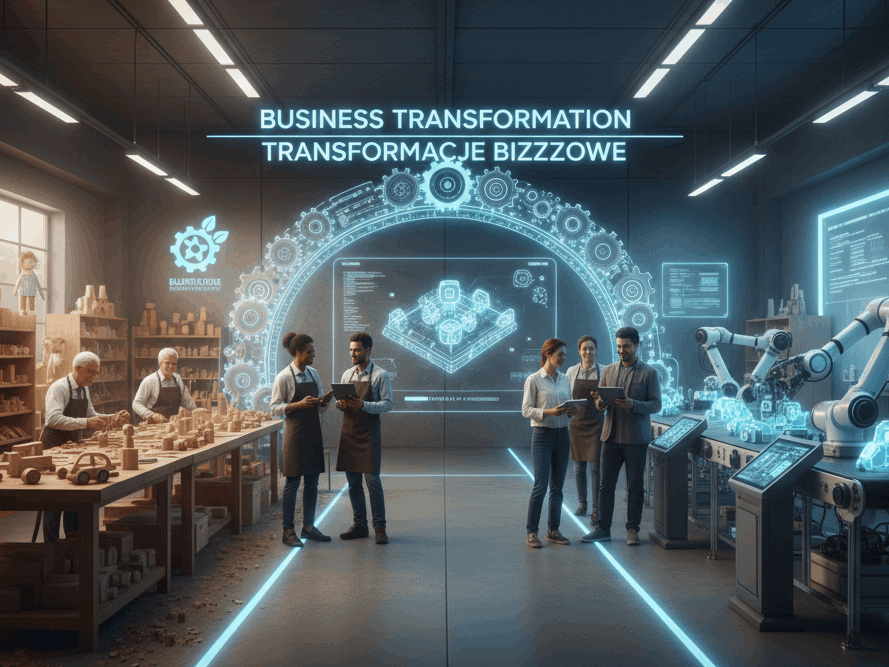
Implementation of precisely planned changes in operational processes, organizational structure, or the company's business model, aimed at improving efficiency, adapting to the market, or increasing competitiveness.
Transformation can encompass both a complete reorganization of the business model and changes in selected areas of activity, such as production, sales, purchasing, or support functions.
A change in the operating model (business model change) is often referred to as a Business Pivot — a fundamental redefinition of how a company creates and delivers value. It is a response to technological changes, customer preferences, competitive pressure, or financial problems.
What does business transformation include?
1. Analysis of the initial situation
• assessment of the current operating model,
• identification of weak points and potential for change.
2. Designing a new operating model
• redefinition of processes,
• changes to the product portfolio, markets, or sales channels,
• digitization and automation of business processes.
3. Planning and testing
• creating an implementation strategy,
• analysis of costs, risks, and organizational impact,
• piloting new solutions before full implementation.
4. Implementation and change management
• reorganization of structures,
• adaptation of IT systems,
• team training and communication of changes.
5. Evaluation and adjustment
• monitoring results,
• model adjustments,
• further process optimization.